Many packaging design projects are judged at launch.
The new design is approved. The products arrive on shelves. Internal stakeholders are pleased with the outcome. The project is considered complete.
However, the true test of packaging design often comes much later.
As brands expand their product portfolios, introduce new variants, enter new markets, or update product claims, some packaging systems continue to perform effectively while others become increasingly difficult to manage. What looked successful on day one may become fragmented, inconsistent, or confusing over time.
This raises an important question: why do some packaging designs age better than others?
The answer often has less to do with aesthetics and more to do with how well the design was built to support long-term brand growth.
Great Packaging Builds Recognition Over Time
Packaging is often one of a brand’s most visible and frequently encountered assets.
Consumers may not regularly visit a company’s website or social media channels, but they often interact with its packaging every time they make a purchase.
Over time, visual elements such as colour, typography, imagery, layout, and distinctive design cues help create familiarity and recognition.
This is why consistency matters.
When packaging systems maintain recognisable visual assets across a portfolio, they help consumers identify products more quickly and confidently. The longer these assets are used consistently, the more valuable they can become.
Effective packaging is not only about attracting attention in the moment. It is also about building recognition that accumulates over time.
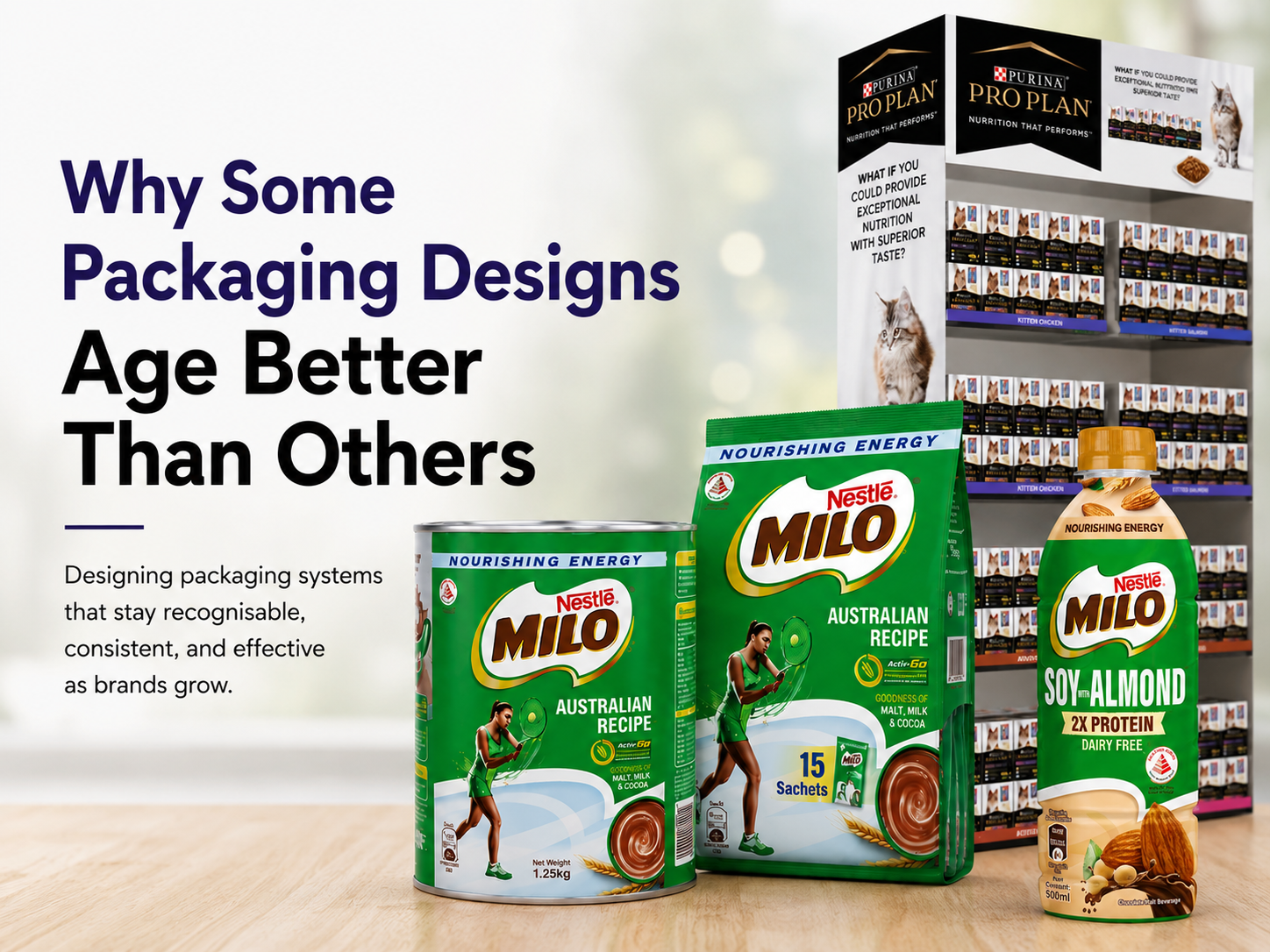
A useful example is MILO. Over the years, the brand has expanded beyond its original product format to include different pack sizes, ready-to-drink formats, and various product offerings across markets.
Despite these developments, consumers can still recognise many of the brand’s core visual cues, including its distinctive green colour palette, logo, and overall packaging architecture.
This consistency helps preserve brand recognition while allowing the portfolio to evolve.
Research from the Ehrenberg-Bass Institute highlights the importance of distinctive brand assets in helping consumers identify and recognise brands quickly.
Consistent use of these assets can strengthen mental availability over time, making it easier for consumers to locate and choose familiar brands in competitive environments.
Portfolio Growth Tests Every Packaging System
Many packaging designs are initially created for a relatively simple product range.
A brand may launch with:
- One product
- One pack size
- A small number of variants
At this stage, maintaining consistency is relatively straightforward.
As the business grows, however, complexity often increases.
New flavours are introduced. Additional pack sizes are added. Product lines expand. Regional variants emerge. Promotional editions appear.
What once seemed like a simple packaging design can quickly evolve into a much larger portfolio.
This is where the strength of the underlying packaging system becomes apparent.
A design that works beautifully for a single product may struggle when applied across ten, twenty, or even fifty SKUs. Variant differentiation may become unclear. Visual consistency may begin to erode. Consumers may find it more difficult to navigate the range.
The challenge is no longer designing one package. It is designing a system capable of supporting future growth.
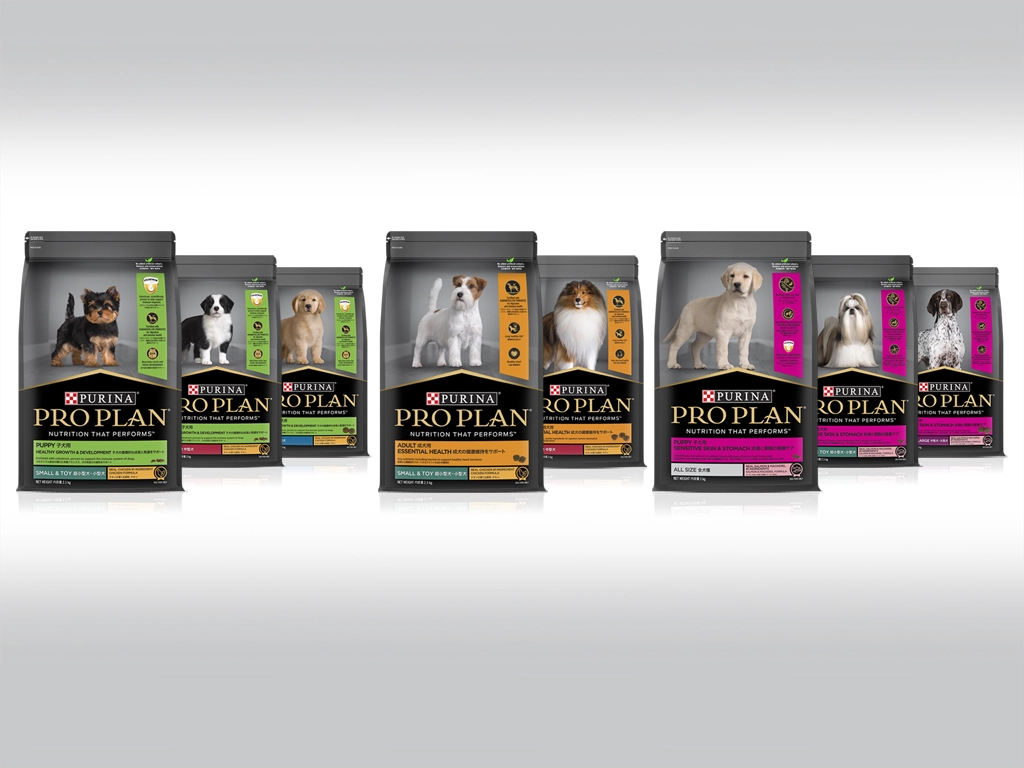
This can be seen across many consumer product categories. A brand may begin with a single product but eventually expand into multiple variants, sizes, formulations, or usage occasions.
The strongest packaging systems provide a framework that allows these additions to be incorporated without losing overall brand coherence. Consumers can recognise the brand while still distinguishing between different products within the range.
Evolution Is Necessary, Reinvention Is Not
Brands cannot remain static.
Consumer expectations change. Product formulations evolve. Markets shift. Businesses introduce new offerings.
As a result, packaging must evolve as well.
The challenge is ensuring that evolution does not come at the expense of recognition.
Some redesigns unintentionally discard visual elements that consumers have learned to associate with the brand. While the new design may appear modern or visually appealing, it may also weaken existing recognition built over time.
The most successful packaging updates tend to strike a balance between freshness and familiarity.
They refine and strengthen existing brand assets rather than replacing them entirely.
In many cases, effective packaging evolution is less about reinvention and more about preserving what already works while adapting to new business requirements.
Designing For The Future Creates Better Outcomes
When evaluating packaging concepts, it is natural to focus on immediate objectives:
- Launch requirements
- Marketing goals
- Current product ranges
These considerations are important, but they should not be the only factors guiding design decisions.
A useful question to ask during the design process is:
Will this packaging system still work if the portfolio doubles in size?
Considering future growth early can help brands develop packaging systems that remain:
- Consistent
- Flexible
- Scalable
- Easy to navigate
This long-term perspective often contributes to stronger outcomes over the life of the brand.
Rather than solving only today’s design challenge, it helps create a foundation that can support future developments as the business evolves.
Looking Beyond Launch
The success of a packaging design is not determined solely at launch.
Its long-term value becomes evident as product portfolios expand, new variants are introduced, and the brand continues to evolve.
The packaging designs that age best are often not the most visually dramatic. They are the ones that continue supporting recognition, consistency, and portfolio growth years after they first reach the market.
In that sense, effective packaging design is not just about creating a package for today’s product.
It is about creating a system that can support tomorrow’s brand.